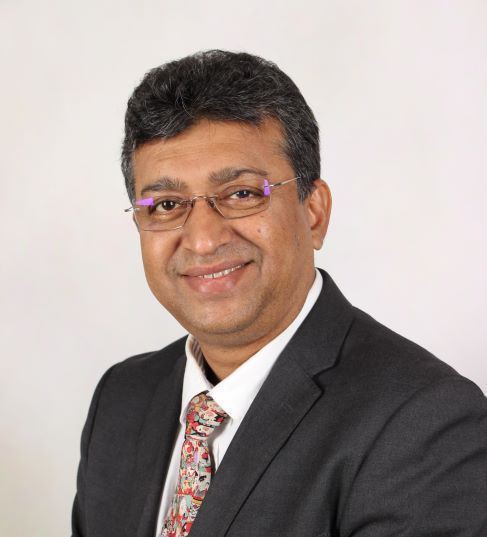
M S Ray
 0 comment
 01 Jul, 2026

Artificial Intelligence is no longer a distant technology. It has entered our offices, classrooms, factories, hospitals, training rooms, homes, and even our personal decisions. Naturally, many people are asking a serious question: Will AI take my job?
The honest answer is: AI may not take every job, but people who know how to use AI may replace people who refuse to learn it.
This fear is not new. When computers first entered offices, many believed that jobs would disappear. Typists, clerks, accountants, administrators, designers, engineers, and managers all felt threatened. But what happened over time? The computer became the inner bloodstream of modern work. It created millions of jobs and helped billions of people across the globe. Today, we cannot imagine life without computers.
AI may follow a similar path—but only if we use it wisely, ethically, and humanely.
According to the World Economic Forum’s Future of Jobs Report 2025, global job disruption may affect 22% of jobs by 2030, with 170 million new roles expected to be created and 92 million displaced, resulting in a net increase of 78 million jobs. The same report highlights that technology skills will grow in importance, but human skills such as creative thinking, resilience, flexibility, leadership, and collaboration will remain critical.
Let us first understand what Artificial Intelligence, or AI is? It is the ability of a computer system to perform tasks that normally require human intelligence.
These tasks may include understanding language, recognizing images, solving problems, making predictions, writing content, translating, summarizing, creating presentations, analysing data, generating code, or supporting decisions.
In simple words:
AI is a machine’s ability to learn from information, identify patterns, and produce useful outputs that appear intelligent.
But AI is not a human mind. It does not have a soul, conscience, emotion, wisdom, or moral responsibility. It works with data, patterns, probability, and instructions.
AI works mainly through four steps:
AI systems are trained on large amounts of information such as text, images, numbers, audio, video, documents, and examples. From this data, AI learns patterns.
For example, if AI reads thousands of business letters, it learns how business letters are usually written. If it studies millions of images, it learns how objects, faces, roads, machines, or defects may look.
AI does not “understand” in the same way humans understand. It identifies relationships and patterns.
For example, when you ask AI to draft a letter, it predicts what words, tone, structure, and content are most suitable based on what it has learned.
Based on the user’s question or instruction, AI generates an answer, document, image, code, summary, analysis, or recommendation.
This is why tools like ChatGPT can write emails, prepare training notes, draft policies, summarize reports, create blog articles, suggest audit questions, or help develop presentations.
AI systems can be improved by better data, better training, human feedback, correction of errors, stronger controls, and ethical governance.
This is why responsible AI management is very important.
AI can be extremely useful in many areas.
It can help with:
For professionals, AI can act like an intelligent assistant. It can save time, reduce repetitive work, improve productivity, and help people think faster.
AI has serious limitations.
AI cannot truly feel emotion. It can write emotionally, but it does not feel compassion, pain, love, loyalty, fear, courage, or responsibility.
AI cannot replace human conscience. It cannot decide what is morally right or wrong in the deepest human sense.
AI cannot take legal or ethical responsibility. If an AI-generated decision harms someone, the responsibility still belongs to human beings and organizations.
AI cannot fully understand human suffering, trust, culture, dignity, or relationship. It can simulate language, but it does not have lived experience.
AI cannot guarantee truth. Sometimes AI may produce incorrect information confidently. This is why human verification is essential.
AI cannot replace leadership, mentoring, caring, negotiation, emotional intelligence, professional judgement, and people-to-people trust.
AI cannot replace the human presence needed in teaching, healthcare, counselling, auditing, leadership, hospitality, safety management, and many service professions where trust and emotional connection matter.
AI can help the hand. AI can help the brain. AI can help the process. AI can help the system.
But AI cannot replace the heart. AI cannot replace conscience. AI cannot replace human wisdom. AI cannot replace responsibility.
AI is not magic. AI is not a monster. AI is a powerful tool.
Used wisely, it can improve productivity, safety, quality, learning, innovation, and human progress.
Used carelessly, it can create misinformation, unemployment, bias, privacy risks, unfair decisions, and social damage.
Therefore, the future is not about humans versus AI. The future is about humans using AI responsibly.
The best professionals will not be those who fear AI. They will be those who learn AI, use it ethically, verify its outputs, and combine it with human judgement, emotional intelligence, and conscience.
AI is strongest where work is repetitive, rule-based, language-based, data-based, or template-driven. This does not mean these professions will vanish completely, but parts of these jobs will certainly change.
Some tasks most exposed to AI include:
Typing, proofreading, grammar correction, letter drafting, routine email replies, report formatting, presentation preparation, meeting summaries, basic translation, simple research summaries, routine data entry, basic bookkeeping, customer service scripts, social media captions, basic content writing, basic graphic design, standard legal/admin document drafting, and routine coding.
Even programmers are not immune. A programmer who only writes routine code from clear instructions may face serious pressure. But a programmer who understands business needs, system architecture, cybersecurity, user experience, ethics, testing, integration, and problem-solving will become more valuable—not less.
The future does not belong to people who merely perform tasks. It belongs to people who understand problems deeply and use AI as a powerful assistant.
AI can generate words, images, code, reports, and presentations. But AI does not have a heart. It does not carry human responsibility. It does not feel trust, pain, dignity, fear, hope, compassion, or moral burden.
Where human emotion, judgement, empathy, trust, courage, and relationship matter, people will continue to need people.
Jobs that require strong human connection will remain deeply important: teachers, trainers, mentors, doctors, nurses, caregivers, counsellors, leaders, auditors, investigators, safety professionals, customer relationship managers, hospitality professionals, negotiators, spiritual guides, social workers, judges, ethical decision-makers, and community leaders.
AI may assist these roles, but it cannot fully replace the human presence behind them.
A doctor may use AI to support diagnosis, but the patient still needs human reassurance. A teacher may use AI to prepare lessons, but the student still needs inspiration. An auditor may use AI to analyse documents, but professional judgement and ethical courage still belong to the auditor. A leader may use AI for strategy, but people still need a leader with conscience.
The biggest danger is not AI itself. The biggest danger is refusing to learn.
People become obsolete when they stop growing. A young professional, a mid-career manager, a senior executive, a trainer, an auditor, a consultant, or even a business owner must now ask:
Am I learning how to use AI responsibly?Am I improving my judgement, communication, creativity, and emotional intelligence?Am I using AI to become better—or am I using it to avoid thinking?
The new generation must not become lazy users of AI. They must become intelligent users of AI. They must learn prompt writing, data awareness, critical thinking, fact-checking, digital ethics, cybersecurity awareness, responsible decision-making, and human-centred leadership.
At every stage of life, one can remain relevant by upskilling. AI should not be treated as magic. It should be treated as a tool—powerful, useful, but requiring control.
This is where ISO/IEC 42001 becomes very important.
ISO/IEC 42001:2023 is the international standard for Artificial Intelligence Management Systems. It provides requirements for establishing, implementing, maintaining, and continually improving an AI management system within an organization. ISO describes it as the world’s first AI management system standard, addressing issues such as ethics, transparency, continual learning, risks, and opportunities.
The message of ISO/IEC 42001 is clear: AI must not be used blindly. Organizations must manage AI with governance, accountability, risk assessment, transparency, human oversight, and continual improvement.
AI can support efficiency, innovation, customer service, decision-making, training, safety, healthcare, education, and sustainability. But if used carelessly, it can also create bias, unemployment, loss of dignity, misinformation, privacy violations, and social harm. OECD also highlights both the benefits of AI, such as productivity and improved job quality, and risks such as automation, bias, discrimination, privacy breaches, and lack of transparency.
Therefore, the question is not only “Can AI do this?”The deeper question is: Should AI do this, and under what control?
If AI is used lifelessly and heartlessly only to reduce people, remove jobs, and increase profit, the result may be dangerous. We may become more productive but less human. We may earn more money but damage society. We may create progress that has no soul.
If AI creates unemployment, hopelessness, inequality, and loss of dignity, then the money earned from AI will be meaningless at the end of the day.
AI must not become a weapon against workers. It must become a companion for human progress.
The right approach is not to reject AI. The right approach is to humanize AI.
Use AI to reduce drudgery, not dignity.Use AI to improve decisions, not remove conscience.Use AI to support people, not discard people.Use AI to strengthen organizations, not weaken society.Use AI with ethics, transparency, accountability, and care.
AI is both a threat and a boon. It depends on how we use it.
For those who refuse to learn, AI may become a threat.For those who learn, adapt, think, feel, lead, and act responsibly, AI will become a powerful boon.
The future will not belong to AI alone.The future will belong to human beings who can combine artificial intelligence with natural wisdom, emotional intelligence, ethical judgement, and a living conscience.
We are looking for professional organizations for joining in our extended global network in your home country. Organizations which is a legal entity meeting our criteria are the ideal ones to join our network. We will honor mutual agreements for training services and want the services be undertaken with utmost professional integrity and due diligence to create value for our customers

M S Ray
Managing Director and Founder of TCB Cert. Worldwide Group
0 comment