
M S Ray
 0 comment
 24 Jun, 2026
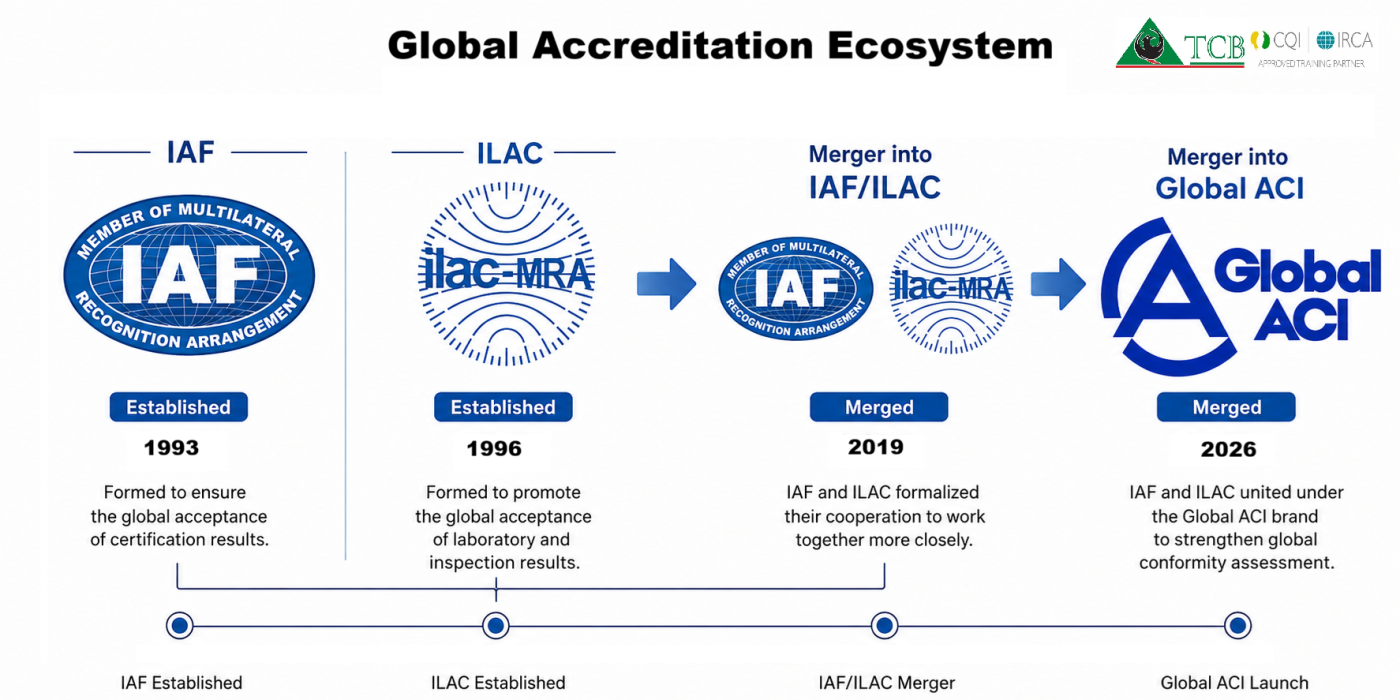
The launch of Global Accreditation Cooperation Incorporated (Global ACI) represents one of the most significant developments in the history of international accreditation and conformity assessment.
For decades, confidence in accredited certification, inspection, and laboratory results was supported by two global organizations:
Together, these organizations helped create the trust infrastructure that allows an ISO certificate issued in one country to be accepted and respected around the world.
As international trade expanded, governments, regulators, businesses, and consumers needed confidence that certification, inspection, and testing activities were being conducted competently and consistently.
IAF and ILAC were established to create global recognition arrangements that ensured accredited conformity assessment results could be trusted across borders. Their work helped eliminate technical barriers to trade and promoted international confidence in accredited certificates, inspection reports, and laboratory test results.
Although highly successful, IAF and ILAC operated through separate governance structures, committees, peer evaluation systems, policies, and recognition arrangements.
As globalization accelerated and conformity assessment activities became increasingly interconnected, maintaining two parallel systems created duplication and unnecessary complexity.
The creation of Global ACI brings these activities together under a single global framework, delivering:
In simple terms, the global accreditation community has moved from two parallel structures to one integrated global trust infrastructure.
One of the lesser-known strengths of the accreditation system is that neither IAF nor ILAC relied on large permanent workforces.
While supported by small secretariats for administration and coordination, the technical expertise came primarily from member Accreditation Bodies such as NABCB, GAC, EIAC, UKAS, ANAB, DAkkS, JAS-ANZ and many others.
Senior executives, technical experts, peer evaluators, assessors, and committee members from these Accreditation Bodies contributed their expertise to the global system while continuing to serve their own organizations.
This collaborative model ensured that the people developing policies and conducting peer evaluations were also deeply involved in the practical application of accreditation requirements.
The same model is expected to continue under Global ACI. The appointment of Mr.Brahim Houla of the GCC Accreditation Center (GAC) as the first Chair of Global ACI reflects this long-standing tradition of leadership drawn from the Accreditation Body community.
A cornerstone of the accreditation system is peer evaluation.
Accreditation Bodies are periodically evaluated by expert peers from other Accreditation Bodies to verify competence, consistency, impartiality, and compliance with international requirements.
This process ensures that accreditation decisions are applied consistently around the world and is one of the primary reasons why accredited certificates, inspection reports, and laboratory results enjoy international recognition and acceptance.
For Accreditation Bodies, the merger simplifies international cooperation through:
The fundamental accreditation requirements remain unchanged, but the international recognition framework becomes simpler and more unified.
For Certification Bodies accredited to standards such as ISO/IEC 17021-1 and ISO/IEC 17024, and for laboratories accredited to ISO/IEC 17025 or ISO 15189, there is very little operational impact.
Existing accreditation requirements, assessment processes, and international standards remain valid.
Organizations should, however, prepare for the gradual transition from IAF and ILAC references to Global ACI references in accreditation marks, recognition arrangements, and supporting documentation.
One of the most common questions is whether existing IAF Mandatory Documents (MDs) and ILAC guidance documents remain valid.
The answer is yes.
Existing IAF MDs, IAF Informative Documents, ILAC Policies, and ILAC Guidance Documents continue to apply until formally replaced or revised by Global ACI.
The transition is expected to be gradual and controlled, ensuring continuity and stability for Accreditation Bodies, Certification Bodies, Laboratories, and their clients.
Over time, these documents are likely to be harmonized and republished under the Global ACI document structure.
This development presents an important opportunity for Training Organizations.
Providers of ISO 9001, ISO 14001, ISO 45001, ISO 22000, ISO 27001, ISO/IEC 17025, ISO/IEC 17020, and Lead Auditor training should update courseware to explain:
Future auditors must understand not only how to conduct audits, but also how the global accreditation infrastructure supports confidence, impartiality, competence, and international acceptance of certification results.
As a provider of CQI/IRCA-approved auditor training, inspection, certification, and conformity assessment services, TCB is responsible for helping professionals understand the evolving accreditation landscape.
The birth of Global ACI is not simply a change of name. It represents the continued strengthening of the global system that underpins trust in accredited certification and conformity assessment.
By incorporating these developments into our training programs, audits, and professional guidance, we help auditors, organizations, and decision-makers better understand the ecosystem that gives value and credibility to accredited certificates worldwide.
The formation of Global ACI does not change the fundamental principles of accreditation. Instead, it simplifies and strengthens them.
The standards remain. The confidence remains. The international recognition remains.
What changes is the creation of a single, unified global framework that will make accreditation, certification, inspection, and laboratory recognition more consistent, efficient, and easier to understand for future generations of professionals.
Global ACI is not the beginning of a new system—it is the next evolution of a system that has been building international trust for more than three decades.
We are looking for professional organizations for joining in our extended global network in your home country. Organizations which is a legal entity meeting our criteria are the ideal ones to join our network. We will honor mutual agreements for training services and want the services be undertaken with utmost professional integrity and due diligence to create value for our customers

M S Ray
Managing Director and Founder of TCB Cert. Worldwide Group
0 comment