
M S Ray
 0 comment
 27 Jun, 2026
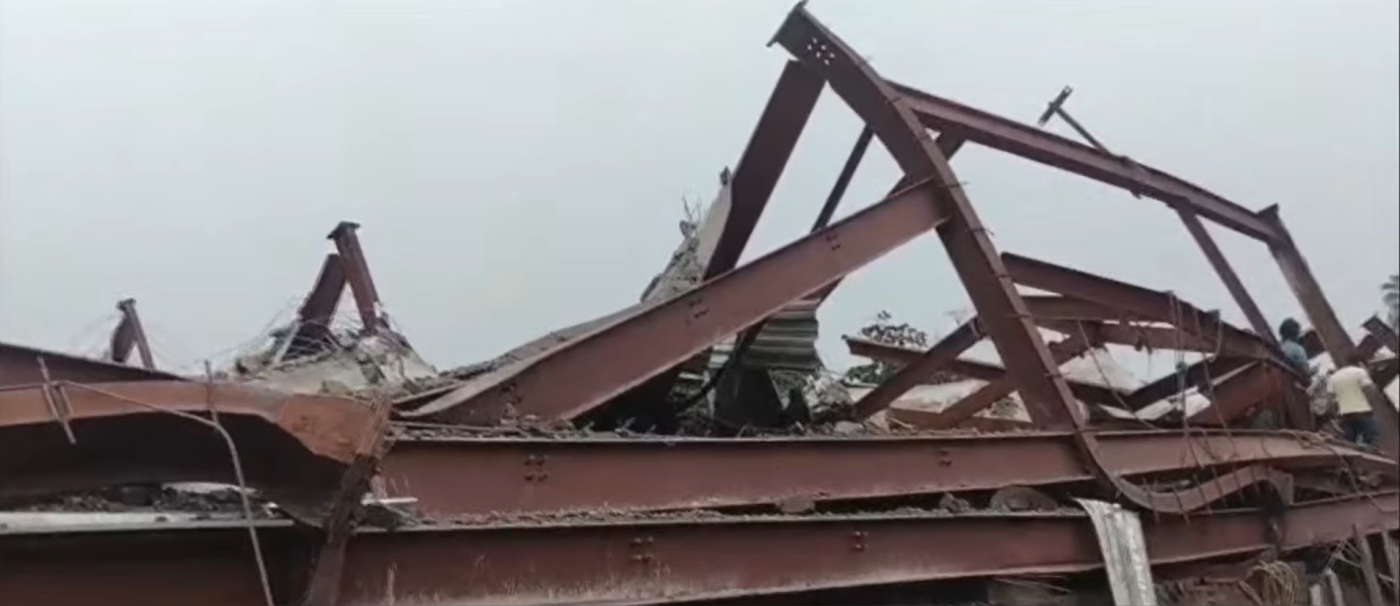
On 24 June 2026, an under-construction warehouse structure collapsed at Taratala in Kolkata, triggering a major rescue operation involving multiple emergency agencies. Early reports indicated deaths, injuries and workers trapped under debris. Later reports showed that the human loss increased as rescue and recovery operations continued.
This incident must not be viewed only as a structural failure. It should be studied as a possible failure of management commitment, design control, construction control, competence, inspection, emergency preparedness and regulatory oversight.
In construction, quality is not cosmetic. Quality is safety. Quality is life protection. Quality is prevention of loss. When a structure collapses, the failure is not limited to concrete, steel, bolts, welds or drawings. It may reflect a deeper failure of leadership, culture, competence, planning, design verification, process control and inspection discipline.
This is why the Taratala incident should become a serious case study for construction owners, developers, contractors, engineers, supervisors, workers, government agencies, auditors and training institutions.
A collapse during construction rarely happens because of one isolated mistake. Accident investigation normally asks:
What failed?Why did it fail?Who controlled the risk?Was the risk known?Was the design adequate?Were the materials suitable?Was the work executed as approved?Were inspections performed before proceeding?Were workers competent and supervised?Were warning signs ignored?Did leadership create pressure to progress faster than safe construction allowed?
From a management system viewpoint, the investigation should not stop at the last visible failure. It must go backwards through the full chain of responsibility: owner requirements, design inputs, design approval, contractor selection, procurement, construction method, inspection, supervision, competence, risk assessment and emergency preparedness.
The central question is not only “Why did the roof collapse?”The deeper question is: “How did the management system allow an unsafe condition to develop, remain undetected and reach the point of disaster?”
ISO 9001:2015 Clause 5 requires top management to demonstrate leadership and commitment. In a construction project, leadership commitment must be visible in decisions, not merely in policy statements.
A serious investigation should ask whether the owner, developer and contractor leadership:
If leadership treated construction quality as paperwork, cost burden or contractual formality, then Clause 5 failure becomes a central issue. Leadership commitment means ensuring that people do not die because of poor planning, weak control or ignored warning signs.
Before design begins, the organization must understand requirements. In construction, “customer requirements” are not only the owner’s commercial requirements. They also include statutory, regulatory, structural, safety, operational and stakeholder requirements.
For a warehouse, the design input should consider:
If the original requirement was not properly defined, the design could be inadequate even before construction started. A warehouse is not merely a covered shed. It is a load-bearing industrial facility where wrong assumptions can become fatal.
In construction, design control is a life-safety process. The investigation should examine whether the design was properly planned, reviewed, verified, validated and approved.
Critical questions include:
Were all load and application requirements clearly defined?Were soil investigation reports available and reviewed?Were wind, seismic, roof, service and construction loads considered?Was the intended use of the warehouse clearly documented?Were statutory and building code requirements identified?
Were structural drawings, connection details, reinforcement details, steel member sizes, erection drawings and method statements complete and approved?Were temporary works, staging, shuttering, supports and construction sequence clearly defined?
Was the design independently reviewed by a competent structural engineer?Were design changes reviewed and approved before implementation?Were interfaces between civil, structural, roofing, erection, MEP and fire safety teams controlled?
Did the output meet the input?Were calculations checked?Were drawings checked against design assumptions?Were material specifications aligned with structural requirements?
Was the design suitable for the actual intended application?Was it validated for real use, including storage loads, movement of equipment, weather exposure and construction-stage loading?Was the partially completed structure safe for the sequence of construction activities being performed?
A building may appear strong on paper, but if design validation does not consider actual use and construction sequence, the design control process remains incomplete.
Accidents often contain critical human actions. These are the actions or inactions that directly influence whether a hazard becomes a disaster.
In this case, investigators should examine whether any of the following critical human actions failed:
Human failure is not always carelessness. It may arise from lack of knowledge, poor supervision, weak culture, production pressure, unclear authority, fear of stopping work, or normalization of unsafe practices. ISO 9001 Clause 7.2 on competence becomes highly relevant here. Workers and supervisors must be competent for the tasks that affect quality and safety.
Construction quality depends heavily on competent people. A competent person understands not only how to perform the task, but also what can go wrong and when to stop work.
The investigation should verify:
If people were performing safety-critical work without adequate competence, the failure is not only individual. It is a management system failure.
Clause 8.5 focuses on controlled production and service provision. In construction, this means the work must be executed under controlled conditions.
For a warehouse structure, controlled conditions should include:
If the collapse occurred during casting or erection, investigators should examine whether the temporary and permanent structures were capable of carrying the construction-stage load. Many construction collapses occur not because the final design is weak, but because the temporary condition during construction is not properly controlled.
Material quality is not a commercial detail. It is a safety-critical requirement.
Investigators should verify:
ISO 9001 Clause 8.4 requires control of externally provided processes, products and services. This includes subcontractors, suppliers, testing agencies, design consultants and specialist erection teams.
Clause 8.6 requires release of products and services only after planned verification. In construction, this means work should not proceed to the next stage until inspection confirms that requirements are met.
Before casting, lifting, roofing or loading, there should be clear inspection release. If work proceeded without release, it points to a breakdown in quality control.
A visible defect, unsafe condition, design deviation, missing inspection, weak material, excessive deflection or unapproved change should be treated as nonconforming output.
The key question is whether the site had the authority and discipline to stop work.
A mature quality culture asks:
Is this safe to proceed?Has the engineer approved it?Has the inspection been completed?Are workers protected?Has the risk changed?Should the activity be stopped?
A weak culture says:
Continue.Finish today.Do not delay.We will correct later.
In construction, “correct later” can become “recover bodies later.” That is why nonconforming work must be controlled before it becomes an accident.
The rescue operation showed the importance of coordinated disaster response. However, emergency response after collapse is the last line of defence. The first duty is prevention.
A construction site should have:
Disaster management must move from reactive rescue to proactive risk reduction. The best rescue operation is the one never required because the collapse was prevented.
The owner must ensure that the project is designed, approved, constructed and inspected by competent parties. Delegation to contractors does not remove accountability.
The contractor must control construction quality, supervision, method statements, materials, subcontractors, temporary works and worker safety.
The designer must ensure that the structure is suitable for intended use, applicable loads and construction-stage conditions. Design assumptions must be communicated clearly.
Supervisors must ensure that work is performed as approved and must stop unsafe work.
Workers must be trained, informed and empowered to report hazards. They should not be placed in danger because of poor planning by others.
Municipal, labour, fire, port, industrial and building authorities must ensure that permits, approvals, inspections and enforcement are meaningful. Regulatory approval should not become a paper ritual.
NDRF, SDRF, police, fire services, Army and civil administration play a vital role in rescue. Their work deserves respect, but emergency response cannot compensate for poor prevention.
A structural collapse is also an environmental failure.
The loss includes:
A failed structure becomes waste. A preventable collapse converts material, labour, energy and human effort into debris. This is why quality management, safety management and environmental management must be integrated.
At TCB, we believe that quality is not limited to customer satisfaction. In construction, quality protects life, property, environment, business continuity and national reputation.
A well-implemented management system should integrate:
The Taratala warehouse collapse should become a learning case for every construction organization. It shows that when leadership commitment is weak, design control is poor, competence is inadequate, materials are not verified, inspection is ineffective and construction is rushed, the result can be fatal.
A professional investigation should collect and review:
The investigation should determine not only the immediate technical cause, but also the management system weaknesses that allowed the failure to occur.
The Taratala warehouse collapse is a painful reminder that construction quality is a matter of human life. Poor design control, weak leadership, inadequate competence, substandard material, uncontrolled construction and ineffective inspection are not minor nonconformities. They are potential killers.
This incident highlights the importance of quality and safety practices in projects and constructions.
A serious construction organization must ask before every critical activity:
With the images of the failed and collapsed building, the first few critical failures investigation points should be directed to :
1.0 Design Element, including Review and Approval Process.
Has it been designed correctly? Has it been reviewed? Has it been verified? Has it been validated for actual us
2.0 Quality of the Materials and Compliance to Design and drawing, and any deviation from the approved drawing
Are the materials conforming? A re the workers competent? Has inspection released the work?
3.0 Maintaining proper Erection procedure and sequence
Was there an erection Plan, an approved erection sequence
4.0 Then, of course, other relevant points must be investigated as a result of the preliminary investigation. I would avoid natural factors or any sabotage at this point
Quality in construction is not paperwork. Quality is prevention. Quality is safety. Quality is environmental responsibility. Quality is leadership in action.
TCB’s message is clear: build right, inspect right, audit right and lead right — because when quality fails in construction, people die.
Eng M S Ray
Quality and Safety Management System Lead Auditor/ Tutor
A Certified Incident Investigation Team Leader-TapRoot, USA.
We are looking for professional organizations for joining in our extended global network in your home country. Organizations which is a legal entity meeting our criteria are the ideal ones to join our network. We will honor mutual agreements for training services and want the services be undertaken with utmost professional integrity and due diligence to create value for our customers

M S Ray
Managing Director and Founder of TCB Cert. Worldwide Group
0 comment