
M S Ray
 0 comment
 23 May, 2026

Yes — in many important ways, the certification framework of CQI | IRCA strongly reflects the principles, intent, and philosophy of ISO/IEC 17024 for credible certification of persons.
The essence of ISO/IEC 17024 is very clear: Certification of persons must be independent, competent, transparent, impartial, secure, and resistant to risks that could compromise credibility.
This is extremely important because certification of persons directly affects public trust, professional competence, organizational performance, safety, and in many sectors even public welfare.
The highest level of professional certification cannot be left vulnerable to manipulation, impersonation, plagiarism, conflict of interest, collusion, commercial pressure, or weak assessment controls.
This is precisely why modern CQI/IRCA-approved certification systems have evolved into highly controlled and independently monitored processes.
One of the most important principles within ISO/IEC 17024 is the recognition that training delivery, examination, and certification together can create threats to impartiality if not properly controlled.
The standard recognizes that if one organization fully controls training, prepares candidates specifically to pass the examination, conducts the examination, and then certifies the same candidates without adequate safeguards, the system may become vulnerable to serious credibility risks.
Why?
Because commercial pressure may gradually influence certification decisions.
The danger is that certification may become:
This is exactly why ISO/IEC 17024 expects certification schemes to identify, analyze, eliminate, reduce, or control such threats to impartiality.
The standard therefore, encourages strong separation and control mechanisms between:
This is not merely a procedural requirement. It is a credibility requirement. Because certification ultimately represents trust.
In the public domain, there have occasionally been concerns globally regarding attempts by unethical individuals to compromise professional examination systems, including unauthorized sharing of examination content or attempts to bypass examination integrity controls.
Whenever such risks emerge, credible certification systems must respond decisively.
And this is exactly where robust professional certification systems demonstrate maturity.
The modern CQI/IRCA examination process incorporates multiple layers of independent controls designed to preserve examination integrity and align with the spirit and intent of ISO/IEC 17024.
These controls include:
This creates one of the most credible and defensible assessment environments in professional auditor certification.
The objective is simple: Certification must represent genuine competence — not merely successful attendance in a training class.
The examination process is therefore designed not merely to “test memory,” but to ensure that the individual being certified is genuinely the competent person who completed the learning and demonstrated the required capability.
Another important aspect aligned with ISO/IEC 17024 principles is transparency and fairness.
Professional certification systems must allow candidates to raise concerns, appeals, or complaints in case of perceived irregularities or technical issues.
CQI/IRCA’s controlled examination environment provides traceability through recorded sessions, enabling investigations whenever required.
This level of transparency is extremely important because credible certification systems must not only be fair — they must also be demonstrably fair.
Another extremely important principle within ISO/IEC 17024 is that certification should not become dependent upon mandatory training from only one organization or one training pathway.
This is a very powerful concept within credible person certification.
The standard recognizes that competent individuals may acquire knowledge and competence through many legitimate routes, including:
A mature and experienced professional may already possess the required competence without necessarily attending a specific training course.
Therefore, ISO/IEC 17024 promotes the principle that certification should evaluate competence itself — not merely attendance at a prescribed training program.
This is why, in many credible certification systems worldwide, candidates may be allowed to:
The focus remains on the final outcome:
Can the person competently perform the required function?
—not—
Did the person merely attend a specific classroom?
This principle protects fairness, openness, accessibility, professional mobility, and competence-based recognition.
It also prevents monopolistic restriction over certification pathways.
An equally important strength of the CQI/IRCA framework is the control exercised over Approved Training Partners (ATPs).
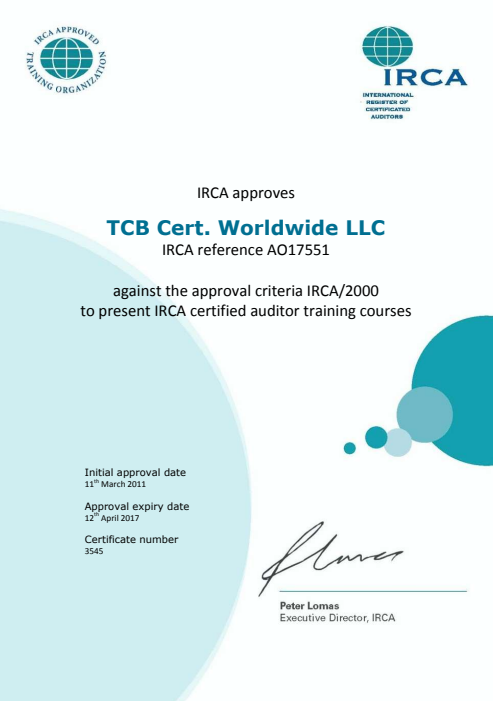
Organizations such as TCB Cert Worldwide LLC that deliver CQI/IRCA-approved courses are themselves periodically monitored and audited.
Training providers are expected to use:
This introduces another important layer of quality assurance into the overall certification ecosystem.
Importantly, the system also avoids creating monopolistic restriction over learning itself.
Learning may happen through multiple pathways, but recognized certification requires controlled and credible assessment mechanisms.
This balance supports both competence development and certification integrity.
Another major alignment with ISO/IEC 17024 philosophy is that the process focuses on competence rather than attendance alone.
A credible Lead Auditor certificate should never simply mean: “The person attended a class.”
It should indicate: “The person demonstrated sufficient competence under controlled assessment conditions.”
That distinction is extremely important.
Because industries, certification bodies, regulators, accreditation bodies, and organizations rely upon these credentials when selecting professionals who may audit quality systems, safety systems, environmental systems, food safety systems, medical device systems, aerospace systems, or high-risk industrial operations.
Weak certification can create serious consequences.
The auditing and conformity assessment profession depends heavily upon public confidence.
If professional certification becomes diluted, compromised, or commercially manipulated, the credibility of the entire conformity assessment ecosystem becomes threatened.
That ecosystem includes:
This is exactly why globally respected systems such as International Accreditation Forum, International Laboratory Accreditation Cooperation, national accreditation bodies, and credible professional certification frameworks place enormous emphasis on impartiality, competence, traceability, transparency, and defensible certification decisions.
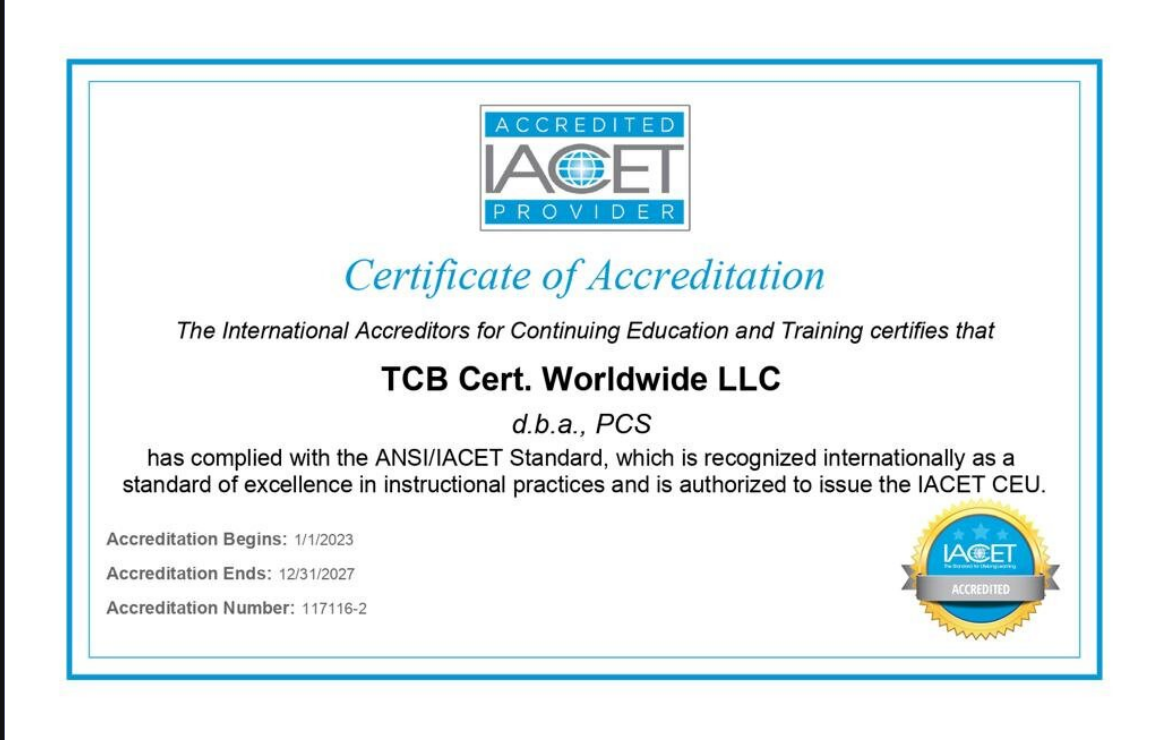
As an auditor, Lead Tutor, Course Developer, Certification Scheme Director, and the professional responsible for achieving CQI/IRCA approval and recognition from ANSI/IACET for TCB Cert Worldwide LLC — among the early internationally recognized systems established from the Middle East since 2011 — I have personally witnessed how rigorous and demanding credible approval systems truly are.
IACET Accredits First Provider in Kuwait - IACET
Achieving approval is difficult. Maintaining approval is even more difficult.
But that rigor is necessary. Because credible certification is not about issuing certificates. It is about protecting trust.
And trust can only survive when competence, integrity, impartiality, transparency, and professionalism remain non-negotiable.
We are looking for professional organizations for joining in our extended global network in your home country. Organizations which is a legal entity meeting our criteria are the ideal ones to join our network. We will honor mutual agreements for training services and want the services be undertaken with utmost professional integrity and due diligence to create value for our customers

M S Ray
Managing Director and Founder of TCB Cert. Worldwide Group
0 comment